
Haywood County Bench Warrants Explained
A bench warrant is court process that can follow a missed court date, an unanswered citation, or a broken bond condition. It is not a new arrest warrant. That kind of process rests on a sworn complaint. In Haywood County, several courts can hold the file. General Sessions and Circuit Court keep the county dockets, while Brownsville City Court and Stanton City Court each run their own ordinance cases. The court name and date on your paper matter more than where the person lives now. Haywood's official General Sessions page covers criminal and traffic work. It lists criminal warrants, re-arrests, and traffic tickets from State Troopers or county deputies. Ask the clerk whether that court truly issued process and what name it uses.
Haywood County Bench Warrants Start With the Missed Event
Dig out the citation, summons, bond order, or hearing notice first. Write down the court, the docket date, the process number, and the issuing agency. A missed traffic date in Haywood County usually runs through General Sessions. An ordinance date may belong to Brownsville or Stanton instead. An indictment capias sits at a different stage of the case. The clerk can say which record is in the file, though no clerk can settle a dispute over notice or excuse a missed setting.
- Call the issuing court clerk using its published number.
- Ask whether a warrant, attachment, capias, or new date was entered.
- Ask whether counsel or a written motion is required before appearing.
- Confirm where to report if the Sheriff or city police holds service process.
- Keep the court's order or receipt after the next step.
Haywood County's General Sessions calendar sorts the docket into lanes by case type. It is not a warrant clinic, and a judge will not hear an unannounced walk-in.
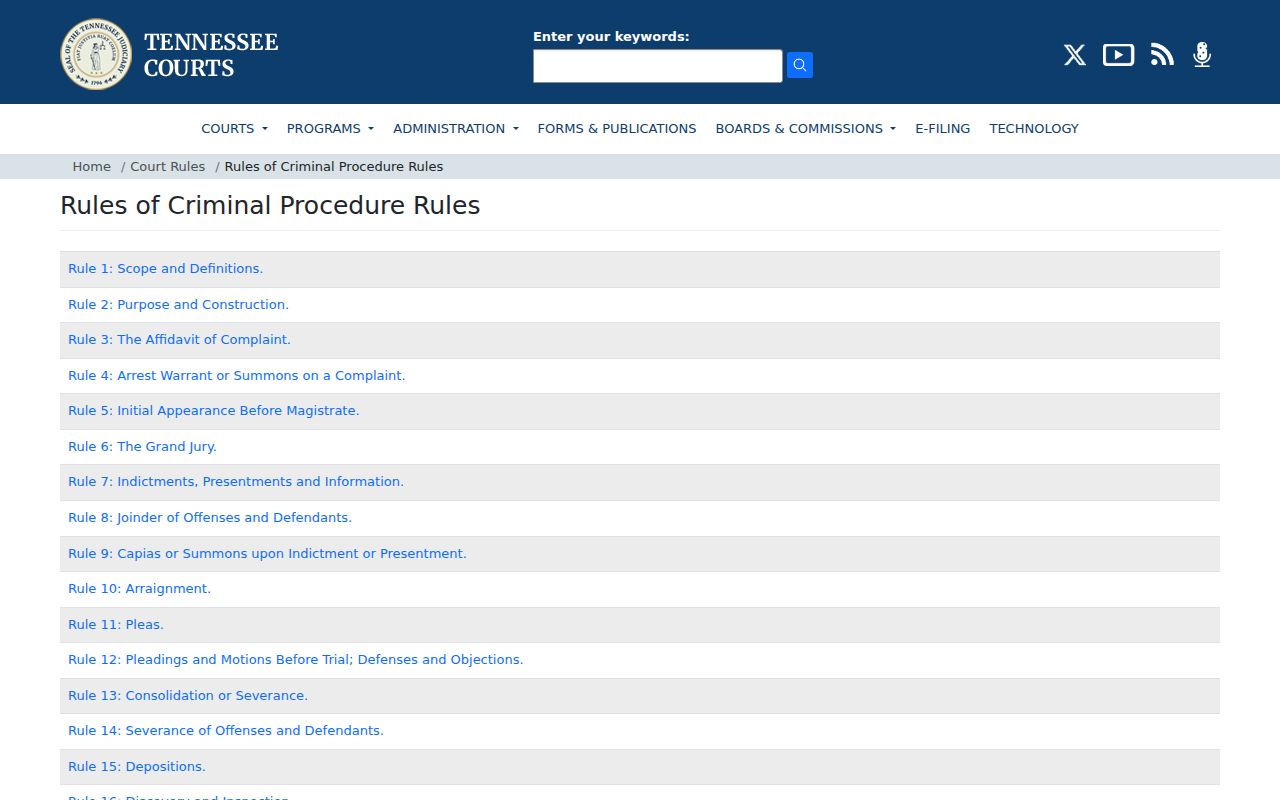
Haywood County follows the state procedure for complaints, warrants, and capias process. Ask the clerk how the rule applies to your case.
How Haywood County Bench Warrants Are Issued
The court record should name the event that triggered the process, the issuing court, and any appearance or bond terms. Tennessee traffic law warns that a failure to appear can bring additional process or a forfeiture. For an indictment or presentment, Rule 9 allows a capias or a summons. Haywood County posts no warrant-status glossary. No blank form or online field list appears either. So ask the Haywood County clerk what the order really is. It may be a bench warrant for a missed setting, a Rule 9 capias, an attachment, or another order. Use the word printed on the document. Not every capias is a traffic FTA.
Brownsville City Court Is a Separate Bench Warrant Route
Brownsville's charter creates a City Court for ordinance cases. A city citation or a missed city setting should go to the City Court Clerk or the city police route. Do not assume it shows in the Haywood County General Sessions record. The city has no public warrant-search portal. Brownsville Police sits at 111 North Washington Avenue. Its administrative line is 731-772-1260; the service or non-emergency line is 731-772-1215. City Hall and the City Court contact sit at 15 East Main, 731-772-1212. Before you visit any Haywood County office, ask which one holds the docket. Police contact and clerk work are different jobs.
Bench Warrants and Arrest Warrants Compared
The reason behind the process points you to the right file. A bench warrant follows a missed court event or condition. An arrest warrant rests on a sworn complaint and a judge's probable-cause decision. Rule 9 ties a capias to an indictment or presentment. Haywood County publishes no complete list of local warrant statuses.
| Process | Common starting point | First question |
|---|---|---|
| Bench / FTA | Missed date, citation, or bond condition | Which court ordered the appearance? |
| Arrest warrant | Written sworn complaint | Which court issued it and who serves it? |
| Rule 9 capias | Indictment or presentment | Has the case moved to Circuit Court? |
These descriptions do not decide a person's legal status. The issuing court's record controls.
A Rule 9 Capias Is Not an FTA Bench Warrant
Tennessee Rule of Criminal Procedure 9 covers a capias or summons after an indictment or presentment. A bench warrant is different. That process follows a missed court date. Haywood's Circuit Clerk keeps the county criminal case record. A felony can move from General Sessions to Haywood County's Circuit Court after charging. The county never uses the phrase “capias pro fine.” Do not swap it for the documented local terms, such as criminal warrant, bench warrant, re-arrest, or Rule 9 capias, without asking the clerk first. The Tennessee Rules of Criminal Procedure index lists Rules 3, 4, 5, and 9.
Resolving a Haywood County Bench Warrant
Ask the issuing court about a reset, an attorney-filed motion, a walk-through, bond, payment, or a judge's review. Each option fixes a different piece of the case. Haywood County has no universal warrant surrender counter. It publishes no local bond schedule and runs no amnesty or safe-surrender event. A Wednesday traffic docket is only a calendar detail. Showing up there does not guarantee a warrant gets handled. The clerk can point you to the next office, but case-specific advice belongs with counsel or the court. If the Sheriff holds service, call the published Sheriff office and ask where to report. Confirm the process and instructions before you walk into any jail or office in Haywood County.
Before appearing: Confirm the issuing court, process type, reporting location, bond terms, and whether an attorney should arrange the visit.
Haywood County Bench Warrant and FTA Fees
Fees for a missed court date in Haywood County come from state law. Tenn. Code Ann. § 8-21-401 sets the schedule. The Tennessee court-fee table lists a $40 failure-to-appear fee, plus a separate $40 clerk charge when General Sessions issues process to compel attendance after a failure to appear or pay. Those two items are distinct. Ask the Haywood County clerk which charges apply rather than treating them as one local warrant price. Paying a balance does not always recall the process either. Ask which order actually ends the bench warrant and which paper proves it. The Haywood payment link opens with selectors for state, county or city, and court, and it publishes no warrant-clearance workflow, so keep your receipts and confirm the docket afterward.
Stanton Municipal Bench Warrants in Haywood County
Stanton's City Court code gives its judge authority over warrants, summonses, appearance bonds, fines, and a municipal docket. The docket fields are listed in the code. They include a process number, the alleged offense, disposition, costs, and whether money was collected. That schema helps you read a record. It is not a live warrant list. The town has no published warrant search screen, so a bench warrant check has to go through the court itself in Haywood County. The official Town Hall calendar places Municipal Court there. It does not list a walk-in warrant clinic. Use the Town Recorder or City Court route to ask for the current judge, date, status, and proof of recall, and do not infer a person's information from a code section. For closed juvenile matters, the Rule 114 page explains when certain juvenile proceedings may be closed.
The image shows the proceeding-closure rule, not a warrant lookup or blanket juvenile-record rule.
Finding the Court That Issued the Warrant
Finding the issuing court is the first step in any Haywood County warrant search. The Circuit and General Sessions Clerk at 100 South Dupree Avenue in Brownsville routes county criminal and traffic questions at 731-772-1112, weekdays 8:00 a.m. to 4:30 p.m. Brownsville's City Court Clerk sits at 731-772-1260. Stanton Town Hall and the Recorder answer at 731-548-2565 and 731-548-2430. Chancery family questions belong to the Clerk & Master, 731-772-0122. Not every case is a county matter. A federal or out-of-county process must go back to the issuing jurisdiction. Before filing any records request, ask the clerk which office owns the file. Tennessee Rule 114 closes dependent and neglect proceedings and can close delinquency or unruly cases, and separate statutes govern access to juvenile files.