
Searching for a Warrant in Haywood County
The court on the paperwork comes first. Haywood County's Circuit Court Clerk handles General Sessions criminal warrants, plus traffic tickets written by Tennessee State Troopers or the Haywood County Sheriff's Department. Call the office and ask which court file applies. No remote warrant form exists. Have the citation, cause, or process number ready if there is one, along with the court name and the date tied to the matter. A full name and birth date help the clerk separate similar records. Give sensitive details only to the clerk. A relative may need permission first. The clerk is the one who can sort county files from city ones.
- Identify the court and issuing agency from the paper.
- Call the Circuit or General Sessions Clerk about county criminal or traffic process.
- Contact Brownsville City Court or Stanton Town Hall for a municipal citation.
- Ask the Sheriff whether it can confirm service information; use a narrow records request for a copy.
- For federal matters, use the federal clerk or counsel, not a county name search.
Haywood County Warrant Search Gaps
Haywood County's Sheriff publishes no warrant search online. No active-warrant roster or most-wanted list either. That gap does not prove an internal office holds no record. The Circuit Court page does mention a public terminal in the lobby. It never calls the terminal a warrant database or explains its fields. Call before you travel. Ask what the screen searches, whether staff can explain a process flag, and whether the result is current. Skip commercial name-search services. The clerk's confirmation is the only one that counts in Haywood County.
Warrant Search Fields Explained
Haywood County publishes no public warrant form, so there are no search boxes to fill online. Treat these details as notes for a clerk. Call first. Ask which identifiers the office needs before you send any personal data.
| Field or clue | Type | Public form | What to ask |
|---|---|---|---|
| Full name | Text | None located | Can prior or middle names help separate records? |
| Date of birth | Date | None located | Share privately only if needed for matching. |
| Case or citation number | Text | None located | Which court file does this number identify? |
| Warrant number | Text | None located | Ask if a process number is in the existing file. |
| Court and process type | Routing | No online selector | Is this Circuit, Sessions, city, juvenile, or federal? |
Haywood County publishes no wildcard rule, name-match logic, status menu, or reset button, so assume nothing about how searches behave.
Haywood County Warrant Fields
A Haywood County court record may show a process number, issuing court, date, process type, alleged offense, issuing officer, bond terms, and a return of service. No blank sample warrant is published. No official number format appears either. These fields are a reading guide. They do not promise that every record is public or that all offices store the same information.
| Process number | Ask whether the file assigns one; no local format is published. |
|---|---|
| Issuing court | Shows which clerk can answer the court-status question. |
| Type and date | Distinguishes arrest warrant, bench/FTA, Rule 9 capias, or city process. |
| Service return | May record whether an officer served or returned process. |
| Current status | Confirm directly; local status labels and update times are not public. |
TN-EXAMPLE-0000 is a made-up sample. It is not a real Haywood County warrant identifier, and any status word should be read with the court's date and process type.
Haywood County Federal Warrant Boundary
A federal court record never sits in the Haywood County clerk's state docket system. Haywood County lies in the Western District of Tennessee. The federal courthouse is in Jackson. Take a federal warrant question to the court or agency named on the notice, since county residence does not change the jurisdiction. PACER's Case Locator searches federal case dockets. It does not cover state or county warrant files. The U.S. Marshals Service lists the Western District and the Two Rivers Violent Fugitive Task Force. That is agency information, not a public warrant roster.
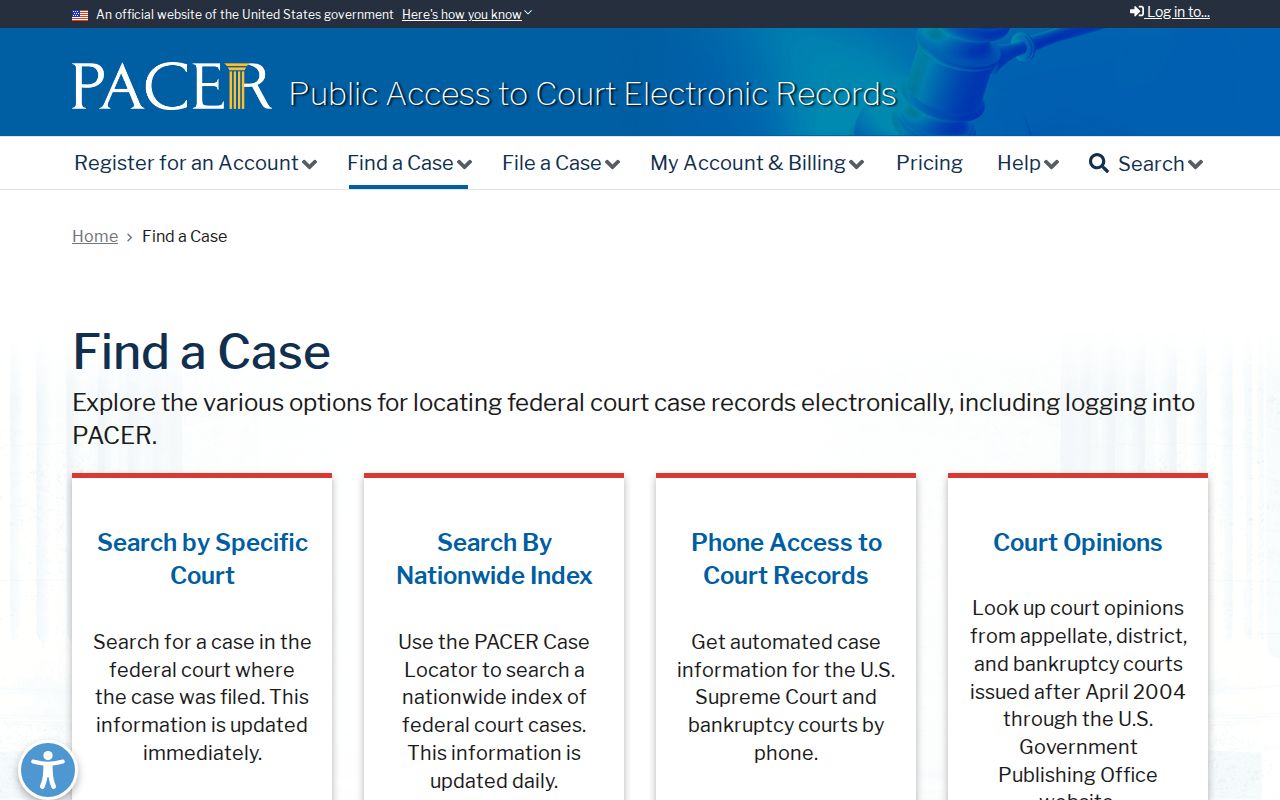
That PACER page documents a federal docket interface. The Jackson court-locations page marks the federal courthouse route relevant to Haywood County, and it is no Haywood County warrant lookup.
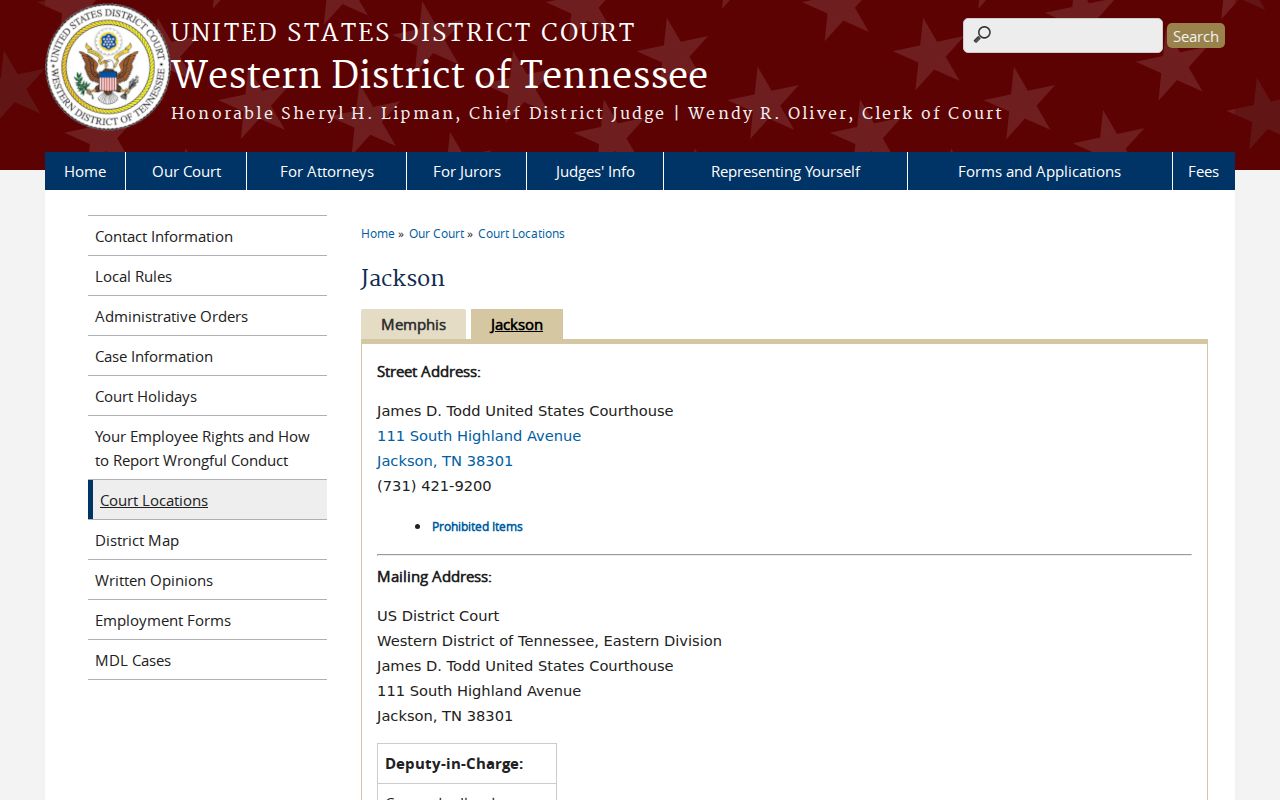
The Jackson courthouse marks the separate federal route for Haywood County, and the county clerk there cannot clear federal process.
What a Warrant Search Shows
Ask what an office is really describing. A court docket line, a signed process document, a service return, a bond entry, or a payment each answer a different question. A Haywood County clerk can identify the file. The Sheriff may hold service information. Neither answer reflects the city or federal systems. Have the clerk separate a current order from a past event, and ask which document controls if the screen and the paper differ. Haywood County publishes no status-code glossary or system synchronization schedule. A stale result belongs back at the issuing court's most recent action.
Haywood County's Municipal Warrant Split
Brownsville and Stanton each run their own municipal court. A town ordinance case may not appear on any Haywood County court screen. Brownsville's charter creates a City Court. Stanton's code outlines a judge, docket, warrants, summonses, bonds, and fines. Neither town posts a public warrant search. Read the court name on the original ticket. Brownsville Police or City Court can route a city ordinance matter, and Stanton's Town Recorder and City Court route do the same for a Stanton case. A Haywood County traffic citation written by THP or a county deputy can still belong in General Sessions, even when the stop happened inside town limits. The Rule 34 public-access text governs these court records.
The court-access reference does not merge municipal dockets into the county system.
Where to Check Warrants in Haywood County
Haywood County runs Circuit, Chancery, General Sessions, and Juvenile Courts, along with municipal courts in Brownsville and Stanton. For most county criminal and specified traffic matters, the Circuit/General Sessions Clerk is the office to call. Reach that clerk at 100 South Dupree Avenue in Brownsville, or dial 731-772-1112 on weekdays from 8:00 a.m. to 4:30 p.m. The Sheriff sits at the same street address. His number is 731-772-6158, though that line is not billed as a 24-hour warrant line for Haywood County.
Circuit and General Sessions Clerk
100 South Dupree Avenue
Brownsville, TN 38012
731-772-1112
Haywood County Sheriff's Office
100 South Dupree
Brownsville, TN 38012
731-772-6158
Chancery, family, or probate matters in Haywood County belong to the Clerk & Master, not the County Clerk. Brownsville and Stanton residents should start with the municipal contact listed in each city's official directory.
Haywood County Warrant Status Checks
A blank result in Haywood County is not legal clearance, because no complete public warrant system exists. One warrant may sit in a city docket. It may hide in a juvenile or sealed file, an outside county, a federal case, or a serving-agency record. So when you call about a Haywood County warrant, ask the clerk which office and which system were checked. Get the exact status words that office uses, too. Wanting a copy changes the rules a bit. The Sheriff's public-records policy wants a specific written request for one, though an inspection request may be oral. A delay response within seven business days is not a promise that production wraps inside seven days, so ask for an estimate, the delivery method, and any exemption or redaction explanation.
Restricted Warrants and Access Rules
Tennessee's Public Records Act covers records a Haywood County office actually holds, and exceptions apply. Court files follow their own access rule. Sealed material, juvenile records, and protected investigative details may be withheld or redacted. A request cannot force a clerk to build a new countywide list or hand out legal advice.
Key Rules:
Tennessee Public Records Act covers inspection and copies with custody and exemption limits.
Supreme Court Rule 34 governs court-record access, including sealed records.
Juvenile Rule 114 governs closure of dependent/neglect proceedings and possible closure of delinquency or unruly hearings. Juvenile-file access has separate legal limits; ask the clerk about the specific record.
In Haywood County, ask whether a denial means no responsive record at that office, a different custodian, an exemption, or too little detail. Those answers are not interchangeable.