
Haywood County Municipal Court Warrants
Brownsville and Stanton each run their own municipal court route for town ordinance matters. Brownsville's charter creates a City Court with a City Judge, while Stanton's code spells out its City Judge, the municipal docket, arrest warrants for ordinance violations, summonses, subpoenas, bonds, fines, and costs. Those city files sit apart from Haywood County Circuit and General Sessions records. The court named on a ticket is your best routing clue. A state trooper or county deputy can write a traffic ticket inside a town that still belongs to General Sessions, so the location of the stop does not settle ownership. The county clerk page identifies the county route; the municipality alone never decides who owns a case.
Haywood County Municipal Courts by City
Haywood County lists only two incorporated towns, Brownsville and Stanton, so there are just two municipal routes. Brownsville, the county seat, has a charter-created court. Stanton holds its municipal court at Town Hall. Neither town publishes a public warrant portal or an active-warrant roster.
| Municipality | Court route | Public contact | Record path |
|---|---|---|---|
| Brownsville | City Court | City Court Clerk route, 731-772-1260; City Hall, 731-772-1212 | City Clerk public-record request |
| Stanton | City Court at Town Hall | Town Hall, 731-548-2565; Recorder, 731-548-2430 | Town Recorder/Form R1 |
Full details for both Haywood County towns sit in the local profiles for Brownsville and Stanton. No unincorporated place in the county has its own city court page.
Haywood County Brownsville Municipal Warrants
Brownsville's charter gives City Court jurisdiction over municipal ordinance violations and ties city-judge authority to arrest and preliminary proceedings for offenses in town. That does not turn every state offense inside the city into a municipal case. Ask the clerk which court actually holds the citation or process. City Hall publishes the City Court contact at 15 East Main, 731-772-1212, and UT MTAS lists City Court Clerk Carolyn Joyner at 731-772-1260. Brownsville Police sits at 111 North Washington Avenue, with an administrative line at 731-772-1260 and a service or non-emergency line at 731-772-1215. The city posts no public warrant search or surrender hours. The Brownsville charter sets up the local court framework; it is not a current warrant list.
Checking a Municipal Court Warrant
Call the city or town court route first, then ask whether Haywood County police hold a separate service record. Brownsville's payment page covers Tickets & Citations and Court Costs, not a warrant lookup. Stanton's calendar lists Municipal Court at Town Hall with no roster or walk-in warrant procedure. Use the official contact for the right municipality and confirm before paying or visiting.
- Read the court printed on the citation.
- Call that court or its published clerk route with the case number and date.
- Ask whether an ordinance warrant, summons, or other process was entered.
- Ask what next date, payment, motion, or appearance is required.
- Keep the court's receipt or order and ask whether police needs a copy.
Haywood County Municipal Warrant Search Limits
Neither Brownsville nor Stanton publishes a public warrant lookup. A city payment page is not a status search, and no official Haywood County page documents a county terminal covering municipal dockets. The Sheriff may hold service information, but no office here says its records include every ordinance warrant, and a missing result on one system cannot confirm the state of another court's file. For a public record, request an existing docket or process entry with a date range or case number. Do not ask a city clerk to build a countywide list. If an office is not the record holder, ask it to name the right court. The Stanton Town calendar shows Municipal Court meeting at Town Hall. That is a venue listing, not a warrant search.
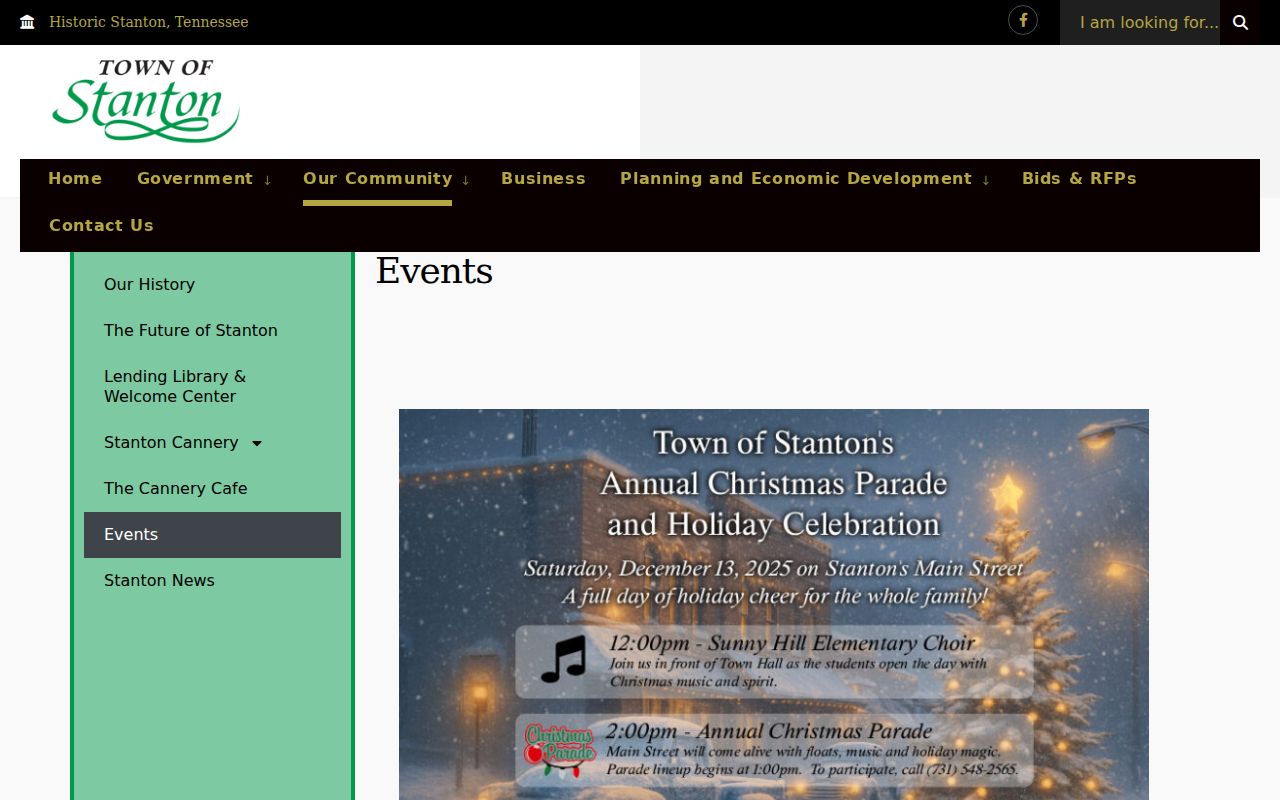
The schedule does not promise a walk-in appearance or current case status.
Inside a Municipal Court Warrant
A municipal record can carry a case or process number, the ordinance or offense, the issuing judge, a court date, disposition, an assessed fine or cost, whether money was collected, and a service or bond entry. Stanton's code expressly describes several of these docket fields. Brownsville's charter establishes its Haywood County court but publishes no sample docket.
| Warrant or summons number | Stanton's code contemplates a number; Brownsville's public format was not located. |
|---|---|
| Offense or ordinance | Identifies the local rule or charge tied to the court matter. |
| Disposition and costs | May show outcome and fine, penalty, or court cost. |
| Collection or service | Ask whether payment or a separate service return is entered. |
MC-EXAMPLE-0000 is a fictional Haywood County sample only, not a real city docket.
Haywood County Stanton Municipal Warrant Code
Stanton Code Chapter 5 covers the City Court's judge and docket, arrest warrants for ordinance violations, summonses, subpoenas, trial and disposition, appearance bonds, fines, costs, and appeals. The code gives you useful vocabulary for a records request, but it exposes no live database. The town calendar places Municipal Court at Town Hall, 8 Main Street, yet it does not establish a full schedule, judge availability, or any warrant clinic. If Stanton changes its process, check the official code and current Town Recorder instructions separately. Read the official Stanton code for its City Court chapter and docket structure.
Brownsville and Stanton Records Policies
In Brownsville, the City Clerk is its public-record request contact. Inspection need not be in writing, though copy requests take a written route. The published fee policy lists $0.25 per black-and-white page, $0.50 per color page, and labor after one hour; confirm current rates with the PRRC. Stanton routes requests through the Town Recorder and Form R1, which asks for a detailed record description, timeframe, delivery choice, and requestor information. Stanton's policy allows free inspection, no charge unless more than two pages, $0.20 black-and-white and $0.60 color copies, and labor after one-half hour. The two Haywood County fee schedules differ, so keep the requests separate.
Haywood County Municipal Warrant Payments
Brownsville, the Haywood County seat, takes online payments under two headings: Tickets & Citations and Court Costs. Neither heading promises that paying clears an active warrant. So before you pay anything, ask the city court clerk what the amount actually covers. It could be a fine, a cost, an FTA fee, a bond, or some other obligation, and a court appearance may still be required even after the money lands. Stanton publishes no online warrant-payment workflow of its own. Call the Town Recorder or the City Court there and ask for the sitting judge, the next court date, the warrant's status, any bond terms, and the paper that proves recall or disposition. Keep your receipt. It proves a payment happened, but it is not necessarily the order that ends the warrant.
Use the court's terms: Payment, warrant recall, case disposition, and service-record updates may be separate steps in a municipal matter.
How to Resolve a Municipal Court Warrant
Call the city court first and ask what the warrant actually requires. It might be a court date. It might be a payment, a motion, or a bond instruction. Haywood County's official pages publish no universal municipal surrender process and no local bond schedule, so the clerk's office is where you learn the specifics. A clerk can route your question, though clerks do not give legal advice about which choice fits your case. Whatever you do, get proof of it. Ask for a docket entry, an order, or a receipt, and ask when police or the Sheriff will see the update. If the court says the matter belongs in General Sessions or Circuit Court, take the county clerk route instead. The issuing court alone controls the next lawful step in Haywood County.